AI receptionist vs human receptionist: which one should answer your phone?

Three ways to answer the phone
When people search "virtual receptionist" they mean one of three very different things, and the price gap between them is huge:
- An AI receptionist answers with a synthetic voice, follows your instructions, books, transfers and texts. Example: Upfirst, from $24.95 a month.
- A live answering service uses trained people in a call center. Example: Ruby, from $250 for 50 minutes.
- An in-house receptionist sits at your front desk, greets visitors and does a dozen other jobs.
And there is a fourth: the hybrid, where AI answers first and a human takes over when needed (Smith.ai).
Cost, side by side
For the same 200-minute month we use everywhere on this site:
| Option | Example | 200-minute month |
|---|---|---|
| AI receptionist | Upfirst | $59.95 |
| AI receptionist | Rosie | $49 |
| AI receptionist | My AI Front Desk | $99 |
| AI + live backup | Smith.ai | $162.50 |
| Live receptionists | Ruby | $720 |
| In-house receptionist | Salary estimate by RingCentral | About $2,900 to $3,300 |
Prices checked on November 11, 2026. The in-house figure is RingCentral's own estimate of a receptionist's yearly salary ($35,000 to $40,000), shown as a monthly range, before benefits.
Where AI receptionists are already better
- Nights, weekends, holidays. They answer at 2 a.m. without overtime.
- Several calls at once. Most plans handle simultaneous calls; Phonely and Upfirst say so explicitly.
- Languages. Upfirst states 35+, Phonely 50+, CloudTalk 70+. A human service usually covers English and Spanish.
- Consistency and records. Every call gets the same script, a transcript and a summary.
Where people still win
Empathy on a hard call, a confused elderly caller, an angry customer, an urgent medical or legal situation: these are moments where a person does better, and where a fumbled answer costs more than the subscription. AI agents can also misunderstand names and addresses, so read your first week of transcripts closely. That is why the services that serve law firms and clinics push transfers and human backup: Smith.ai routes complex calls to a live North America-based receptionist, and Ruby is people first, with AI only behind the scenes.
How to decide
Look at your last 30 calls. If most are "are you open Saturday?", "can I book Tuesday?", "how much for a quote?", an AI receptionist will handle them, and the money you save pays for a lot of missed-call recovery. If a third or more are emotional, complex or high-stakes, start with a hybrid, or keep a human and let AI take after-hours and overflow. You can also run both: forward overflow only, as Rosie suggests for after-hours and overflow calls.
A normal Tuesday, three ways
Picture a small HVAC company with two vans and one office line. It is 8:10 a.m., the owner is on a roof, and three people call within ten minutes.
With an in-house receptionist, the first caller gets a warm voice who knows the regulars by name. The second waits on hold. The third hits voicemail, and probably calls the next company on the list. At 6 p.m. the desk goes home.
With a live answering service like Ruby, all three reach a trained person who takes a message or books from your calendar. It feels personal and polished. It is also the priciest option per minute, so long chatty calls add up fast.
With an AI receptionist, all three are answered at once, at 8:10 or at 2:10 a.m. Each gets the same answers about pricing and service area, a booking slot or a warm transfer to the owner's cell. The catch: if the second caller has a strange question your instructions never covered, the agent can give a vague answer. That is why the first week of transcripts matters so much.
Setting up a hybrid without the headaches
- Keep your people on the phone during business hours, and send only after-hours, lunch breaks and overflow (calls that ring more than four or five times) to the AI receptionist.
- Write down the five questions callers ask most, with your real answers. Paste them into the receptionist's knowledge base.
- Decide what always goes to a person: emergencies, complaints, anything about money owed. Set those as transfer rules.
- Read every transcript for a week. Fix the answers that sound off.
- Only then widen the hours.
Want the hybrid in one subscription? Smith.ai does exactly this, with live receptionists behind the AI. Want AI only, as cheaply as possible? Start with Upfirst or browse the full ranking.
What callers actually notice
Callers forgive a synthetic voice much faster than they forgive being ignored. What annoys them is a long robotic greeting, being asked the same thing twice, and not being able to reach a person. So keep it short and honest. Something like: "Thanks for calling Miller Plumbing, this is the virtual assistant. I can book a visit, give you a quote range or put you through to the team. What do you need?" One sentence about who is speaking, one about what it can do, then let them talk.
With a person at the desk, the risk is the opposite. The voice is warm, but at 12:30 nobody picks up, and on a busy morning callers sit on hold. Neither option is perfect. The question is which flaw your customers will tolerate.
The costs nobody puts in the table
A human receptionist comes with hiring, training, cover for holidays and sick days, and the hours when the desk is simply empty. A live answering service comes with per-minute bills that grow with every chatty caller. An AI receptionist looks cheap, and it is, but it asks for your time: an hour to set it up properly, and a few evenings reading transcripts in the first weeks. Skip that and you get a receptionist that confidently gives last year's prices. Put it in and you get answers that stay the same at 9 a.m. and 9 p.m.
Our picks
From our main ranking and the comparison tool, prices checked November 11, 2026:
Upfirst
Our pickSmall businesses that want booking, warm transfers and 35+ languages on the cheapest plan
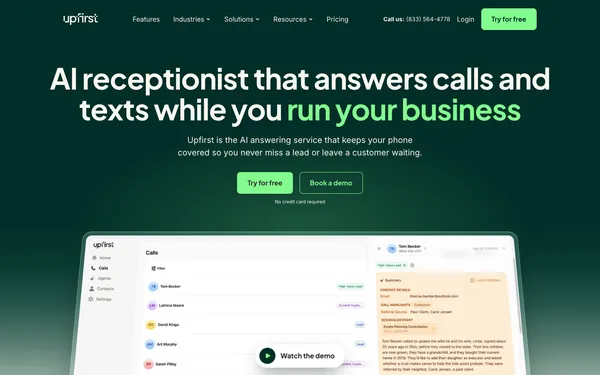
$24.95/mo for 30 calls
Checked Nov 11, 2026
Smith.ai
Firms that want a live North America-based receptionist behind the AI
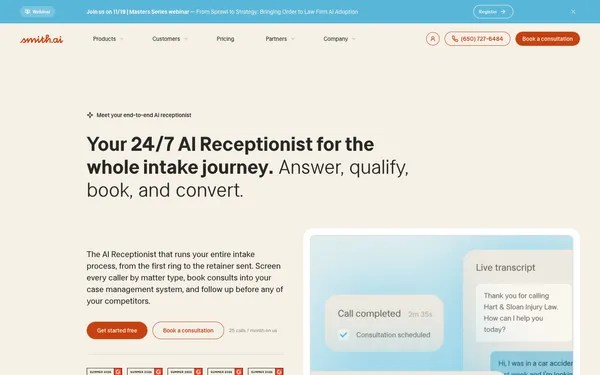
Free plan (25 calls); paid from $150/mo for 75 calls
Checked Nov 11, 2026
Ruby
Businesses that want real people answering, with AI only as a helper
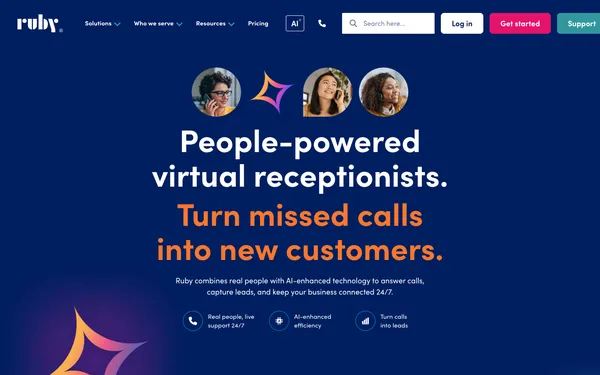
$250/mo for 50 minutes
Checked Nov 11, 2026
FAQ
Can an AI receptionist replace a human receptionist?
For answering, booking, routing and messages, often yes. For greeting visitors, paperwork and sensitive conversations, no. Many businesses use AI for after-hours and overflow and keep a person during the day.
Is an AI receptionist cheaper than a virtual receptionist service?
Yes. For 200 minutes, Ruby's live receptionists cost $720 a month; ready-made AI receptionists cost $49 to $100 for the same month (checked November 11, 2026).
Do callers know they are talking to AI?
Often, yes, and you should not pretend otherwise. A clear greeting and a fast transfer to a person when asked keep callers on your side.
Can an AI receptionist answer Spanish-speaking callers?
Yes, with most services. Rosie, Smith.ai, Dialzara, Sameday AI and Ruby name Spanish on their own pages; Upfirst lists 35+ languages, Phonely 50+ and CloudTalk 70+. Call the trial line in Spanish yourself before you rely on it.
What does a live receptionist service cost compared to AI?
Ruby starts at $250 a month for 50 minutes. AI receptionists in our comparison start at $24.95 (Upfirst, 30 calls) to $49 (Rosie, 250 minutes), prices checked November 11, 2026.
What is a hybrid AI receptionist?
A service where AI answers first and a human can take over. Smith.ai is the example in our comparison.
Written by Dana Whitfield, editor, phone and front-desk software at Best AI Receptionist. Some links are affiliate links: if you sign up through them, we may earn a commission at no extra cost to you. It never changes our scores. Disclosure · How we score.
Keep reading: AI receptionist cost · Is it worth it? · How to choose